
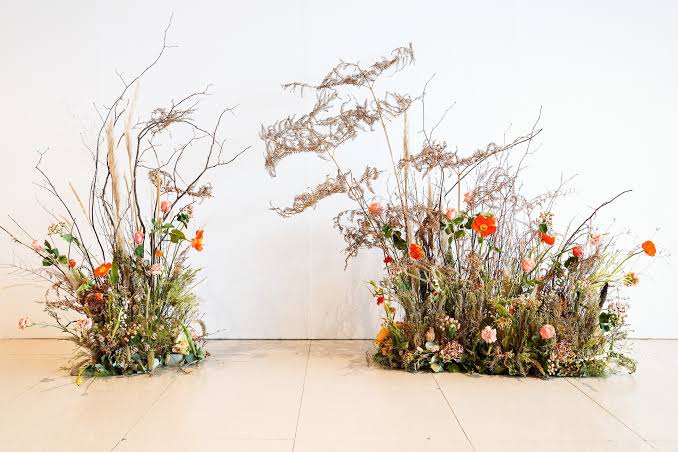
Dried flowers went from dusty to desirable somewhere around 2018 and have not left. They are now a permanent part of the wedding vocabulary rather than a trend.
There are good reasons. Dried flowers for wedding work can be built weeks in advance, will not wilt in a February heatwave, cost less per visual impact, and can be kept forever.
There are also real limitations, and most articles skip them. This one does not.
What Actually Dries Well
Excellent
Australian natives are the stars. Banksia, flowering gum, eucalyptus, kangaroo paw, geraldton wax, proteas and leucadendron dry beautifully and hold both shape and colour.
Grasses and pods: pampas (used carefully), bunny tails, wheat, phalaris, lotus pods, poppy pods, nigella pods.
Everlastings: strawflower, statice, gomphrena, helichrysum. They dry so well they barely look different.
Preserved foliage: eucalyptus, ruscus, palm, fern, magnolia leaf. Glycerine-preserved stems stay supple.
Hydrangea heads, dried slowly, are superb and give real volume. Difficult
Roses dry acceptably but darken significantly. Dahlias and peonies mostly do not dry well at all. Tulips, ranunculus and sweet peas collapse.
If you want the look of a peony in a dried flowers for wedding arrangement, the honest answer is that you cannot have it. Design around that rather than fighting it.
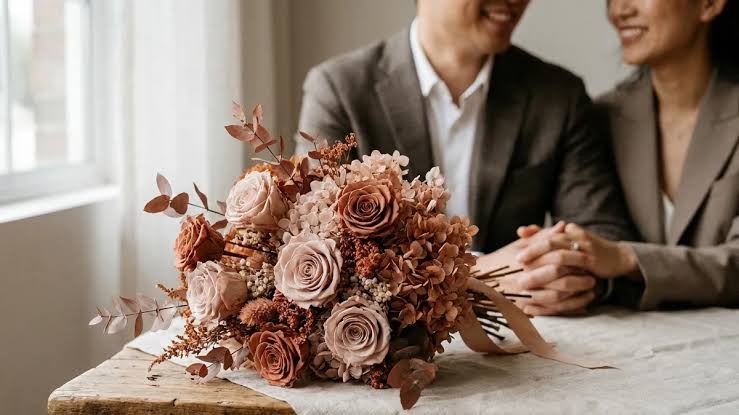
Where Dried Flowers for Wedding Design Works Best
Bouquets
Lightweight, no hydration required, no wilting, and yours forever. Ideal for outdoor summer ceremonies, long days and destination weddings.
The main caveat is fragility. Dried stems snap. They handle heat far better than fresh flowers and handle being knocked far worse.
Buttonholes and Corsages
This is where dried elements shine hardest. A dried buttonhole survives twelve hours of hugging, dancing and jacket-wearing without any of the browning that finishes a fresh one by mid-afternoon. Arches and Installations
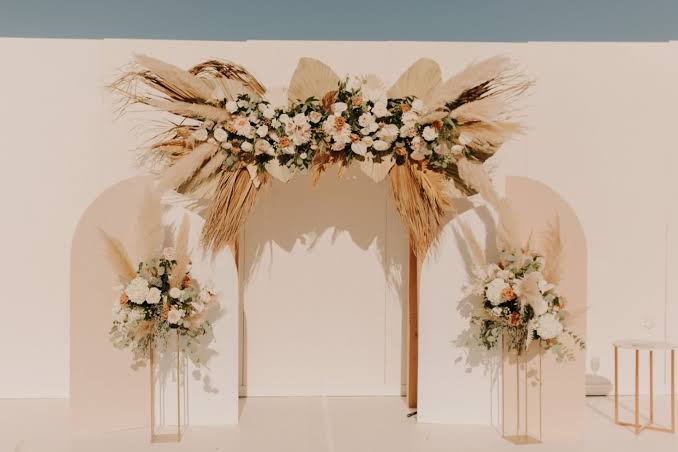
A dried or mixed installation can be built a fortnight in advance, which transforms the logistics of a wedding day. It also cannot wilt in wind or sun.
Gorgeous in warehouse venues, on beaches and anywhere with hard afternoon light. Centrepieces
Cost-effective, reusable, and often given away as gifts afterwards. Dried centrepieces in small vessels or bud vases look modern and cost noticeably less than fresh.
Hair Flowers and Crowns
No wilting over a long day. This is a straightforward win.
The Sydney Humidity Problem
Here is the thing nobody mentions. Sydney’s summer humidity is genuinely hard on dried flowers.
In high humidity, dried stems can reabsorb moisture, soften, droop and occasionally develop mould. This is manageable but must be planned for.
Practical measures: store finished pieces in a dry, air-conditioned room, not a garage. Avoid outdoor overnight storage. Keep them away from bathrooms and coastal salt spray before the day. Ask your florist whether pieces are sealed.
A dried arch built in June and stored properly will be perfect in October. The same arch left in a humid Sydney garage in February will not.
Mixing Dried and Fresh
The best results, in my view, are hybrid. Dried elements provide structure, texture and longevity; fresh flowers provide life, colour and scent.
A typical successful mix: dried grasses, pods and preserved foliage as the framework, with fresh focal blooms added on the morning of the wedding.
This gives you the reliability of dried with the freshness of real flowers, and it usually costs less than an all-fresh design of equivalent scale.
Cost Comparison
Dried flowers are not automatically cheaper per stem. Good dried and preserved product is often more expensive than a fresh seasonal equivalent.
Where you save is elsewhere: no wastage, no last-minute market buy, no refrigeration, less time pressure on the build, and pieces that can be sold or reused afterwards.
Rough Sydney guide:
Dried bridal bouquet: $220 to $450.
Dried buttonhole: $25 to $45.
Dried centrepiece: $45 to $120 depending on scale.
Dried arch installation: $900 to $3,000.
Where Dried Product Comes From
A good deal of dried and preserved floral material sold in Australia is imported, and it comes in under a formal biosecurity process. The Department of Agriculture, Fisheries and Forestry’s guidance on importing dried and preserved flowers and foliage requires inspection on arrival to confirm the material is genuinely dried and free of exotic pests.
That matters practically for two reasons. Imported dried stock carries handling costs that show up in the price, and supply can be lumpy. If you want a specific dried element in volume, order early.
Australian-grown natives, dried locally, sidestep both problems. It is one more argument for a native-led palette.
Colour Realities
Dried flowers shift colour. Whites go cream, pinks go dusty, reds go burgundy, greens go sage or khaki.
That muted palette is precisely why dried arrangements look expensive. But if you have a strict colour scheme, ask to see actual samples rather than photographs. Screen colour is not reliable for dried product.
Bleached and dyed dried flowers exist and can hit brighter tones, though they read as processed up close.
The Sustainability Angle
Dried flowers last for years, which is a genuine advantage over a single-use fresh arrangement.
There is a wider industry conversation here about growing methods, water use and local versus imported supply. The University of Queensland’s horticulture teaching and research covers sustainable production, protected cropping and soil health, which are the upstream questions behind whether any cut flower, fresh or dried, is a low-impact choice.
The short version: locally grown, seasonally harvested and dried is about as low-impact as floral decoration gets.
Frequently Asked Questions
How long do dried flowers for wedding pieces last?
Years if kept dry and out of direct sunlight. Colour fades gradually; shape holds.
Are dried flowers cheaper than fresh?
Not necessarily per stem, but the total project often costs less because there is no wastage and no refrigeration.
Can I dry my own bouquet after the wedding?
Yes, if it contains natives, everlastings or hydrangea. Hang it upside down in a dark, dry, well-ventilated room for two to three weeks.
Do dried flowers smell?
Generally no, though eucalyptus and some natives keep a faint scent. Musty odour means moisture has got in.
Will pampas grass shed?
Yes, considerably. Ask for it to be sealed with hairspray or a fixative if you use it indoors.
Can I mix dried and fresh in one bouquet?
Yes, and it is often the best result. Dried structure, fresh focal flowers added on the day.
The Takeaway
Dried flowers for wedding styling are a genuinely strong choice for Sydney: heat-proof, wind-tolerant, buildable in advance and keepable forever.
Lead with Australian natives, plan around humidity, ask for physical colour samples, and consider a dried framework with fresh focal blooms added on the morning. That combination is hard to beat.